United States Supreme Court
DeLima v. Bidwell, 182 U.S. 1 (1901)
Preface
Taiwan: Searching for Similar Situations in the Past
Many so-called Asia experts continually write articles for well-respected international news publications, discussing the difficulty of finding a solution for the Taiwan controversy. However, none of them look at the specifications of the post-WWII San Francisco Peace Treaty (SFPT), as well as relevant US Supreme Court rulings on similar situations from past eras.
TAIWAN: A key realization must be that the completion of the surrender ceremonies in Taipei on October 25, 1945, marks the beginning of the military occupation of Taiwan, but its territorial sovereignty continues to be held by Japan. Looking back at the historical record,
CUBA: A key realization must be that the completion of the surrender ceremonies on July 17, 1898, marks the beginning of the military occupation, but its territorial sovereignty continues to be held by Spain.
Historical reference can be found in the situation of Cuba as a result of the Spanish American War, and many important comparisons can be uncovered.
For example, with the coming into force of the peace treaty, Cuba's territorial sovereignty was relinquished by Spain, but no "receiving country" was specified, a very similar situation to Taiwan in the post-WWII SFPT. The US Supreme Court ruled that Cuba was "foreign territory under the dominion of the United States," and Taiwan could certainly be described in a similar manner.
The information on this webpage provides an introductory overview to the significance of this description from the DeLima v. Bidwell, 182 U.S. 1 (1901) case.
|
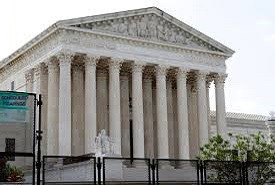

In the above ruling, the term foreign country is used in the more traditional sense of "an indefinite but usually extended expanse of land, or region, which has the capacity to form an independent political unit." Certainly, in May 1901, when this decision was issued, Cuba was not an "independent country" in the modern sense, it was a geographic area under military occupation by the United States. Its final political status was yet to be determined.
More explicitly, after the coming into force of the Spanish American Peace Treaty on April 11, 1899, Cuba was no longer part of Spain, and had not yet achieved independence. The legal occupier was the United States of America. Cuban independence only occurred on May 20, 1902. Hence it seems highly probable that the intent of the Justices in this decision was simply to clarify that in 1901 Cuba was not part of the United States' domestic territory.
However, it cannot be forgotten that from the date of the surrender of Spanish troops in Cuba in July 1898, up to the date of Cuba independence in May 1902; and from the date of the surrender of Japanese troops in Okinawa in Sept. 1945, up to the date when Okinawa (Ryukyus) was given back to Japan in May 1972, the US flag was flying, and US military personnel were in charge of local administrative matters.
Many researchers are surprised to find out that this is a good model for how Taiwan's post-WWII administration should have been handled.
More explicitly, after the coming into force of the Spanish American Peace Treaty on April 11, 1899, Cuba was no longer part of Spain, and had not yet achieved independence. The legal occupier was the United States of America. Cuban independence only occurred on May 20, 1902. Hence it seems highly probable that the intent of the Justices in this decision was simply to clarify that in 1901 Cuba was not part of the United States' domestic territory.
Footnote: It is a well established legal principle that conquered territory of the United States remains as foreign territory. In Brewer v. United States, 79 F. Supp. 405 (1948), No. 27647, U.S. District Court for the Northern District of California, the Plaintiff presented the contention that Okinawa was not a "foreign country," but, because it had been militarily conquered and was under the exclusive military domination of the United States, was a part of the domain of the United States as its conqueror.
However, the judges held that this contention was basically unsound, because, under international law and our own, conquest alone does not make a foreign country (or foreign area) any less foreign, . . . . . .
Furthermore, it appears from the record that the Department of State, in conformity with these principles has declared Okinawa to be foreign territory under military occupation of the United States. Such military occupation began in Sept. 1945. Also see -- Callas v. United States, 152 F. Supp. 17 (1957) U.S. District Court for the Eastern District of New York, Civ. A. No. 15979.
However, the judges held that this contention was basically unsound, because, under international law and our own, conquest alone does not make a foreign country (or foreign area) any less foreign, . . . . . .
Furthermore, it appears from the record that the Department of State, in conformity with these principles has declared Okinawa to be foreign territory under military occupation of the United States. Such military occupation began in Sept. 1945. Also see -- Callas v. United States, 152 F. Supp. 17 (1957) U.S. District Court for the Eastern District of New York, Civ. A. No. 15979.
However, it cannot be forgotten that from the date of the surrender of Spanish troops in Cuba in July 1898, up to the date of Cuba independence in May 1902; and from the date of the surrender of Japanese troops in Okinawa in Sept. 1945, up to the date when Okinawa (Ryukyus) was given back to Japan in May 1972, the US flag was flying, and US military personnel were in charge of local administrative matters.
Many researchers are surprised to find out that this is a good model for how Taiwan's post-WWII administration should have been handled.
|
Cuba Theatre
Historical Overview of the Spanish-American War
|
Flag Flying over Cuba
|
||
 |
1898.02.15 | conflict between military forces of the two countries | Spanish Flag |
|
1898.04.22 | US declares war | Spanish Flag |
|
1898.07.17 | surrender of Spanish military forces in Cuba | USA flag |
|
1898.12.10 | Spain and US sign peace treaty | USA flag |
|
1899.04.11 | Spanish-American Peace Treaty (Treaty of Paris) comes into force | USA flag |
|
1902.05.20 | US Military Government in Cuba ends by proclamation of Commander in Chief Theodore Roosevelt | USA flag |
|
1902.05.20 | Republic of Cuba is founded | Republic of Cuba flag |
US Supreme Court Cases relevant to a discussion of Cuba's legal status after the Spanish American War (whereby the "mother country" of Spain had already given up the sovereignty of Cuba, but no "receiving country" was specified in the post-war treaty)
|
 1901.01.14 Neely v. Henkel, 180 U.S. 109 (1901)
Hence, what the DeLima v. Bidwell ruling is explaining is that there is a second CATEGORY of (overseas) territory, which is foreign, but at the same time it is "under the dominion of the United States."
Chart #1
| US OVERSEAS TERRITORY | |||
| Category of Territory | US Supreme Court Description | Common Description / Nomenclature | Legal Reference |
| Category I | Domestic territory (Domestic country) | US overseas territory | US Constitution's territorial clause (Article IV, Sec. 3, cl. 2) |
| Category II | Territory under the dominion of the United States and/or "territory held in trust for its inhabitants" | US overseas quasi trusteeship | US Supreme Court rulings in DeLima v. Bidwell (1901), Neely v. Henkel (1901) and other cases |
Notes & Commentary
Note #1: |
Addendum
|
Additional reference is made to FM 27-10 Rules of Land Warfare published October 1, 1940, by the US Dept. of War
FM 27-10 Rules of Land Warfare, (1940 edition) para. 281:
Necessity for military government. - Military government is the organization through which a belligerent exercises authority over the territory of the enemy invaded and occupied by him. The necessity for such government arises from the failure or inability of the legitimate government to exercise its functions on account of the military operations or occupation.
During the period of WWII in the Pacific, US military forces were responsible for the conquest/liberation of (Japanese) Taiwan. The direct result of conquest is to obtain jurisdiction over the territory, hence it is clear that through its efforts in WWII the United States obtained jurisdiction over Taiwan. Further evidence in support of such an interpretation is found in SFPT Article 4(b), which confirms the jurisdiction of USMG over "Formosa and the Pescadores" (aka Taiwan).
| LINKs |
| Additional Webpages of Interest |
| Most Important Principles -- Law of Occupation |
| Discussing Taiwan's Military History: Fundamental Concepts |
| Truth of Taiwan's Undetermined Status |
| Stages of Military Occupation |
| Nationality Decrees Issued in Tunis and Morocco (PCIJ) |
| Peace Treaty Specifications: Cuba and Taiwan |

[English version] https://www.twdefense.info/trust3/court-delima.html
[Chinese version] https://www.twdefense.info/trust3/court-delimach.html